Brown University’s Department of Cognitive and Psychological Sciences (CoPsy) supports four distinct undergraduate concentrations: Psychology, Cognitive Science, Cognitive Neuroscience, and Behavioral Decision Sciences (BDS). How do students decide which one to choose, and navigate courses and research?
A key part of this progress is the presence of Departmental Undergraduate Groups (DUGs), in which experienced, more senior students help budding concentrators approach new topics and engage with professors as they learn about the mind, brain, and behavior. The CoPsy DUGs—organized into Psychology, Cognition, and BDS—offer mentorship, host events, and provide a home in the department for students at all stages of their degree.
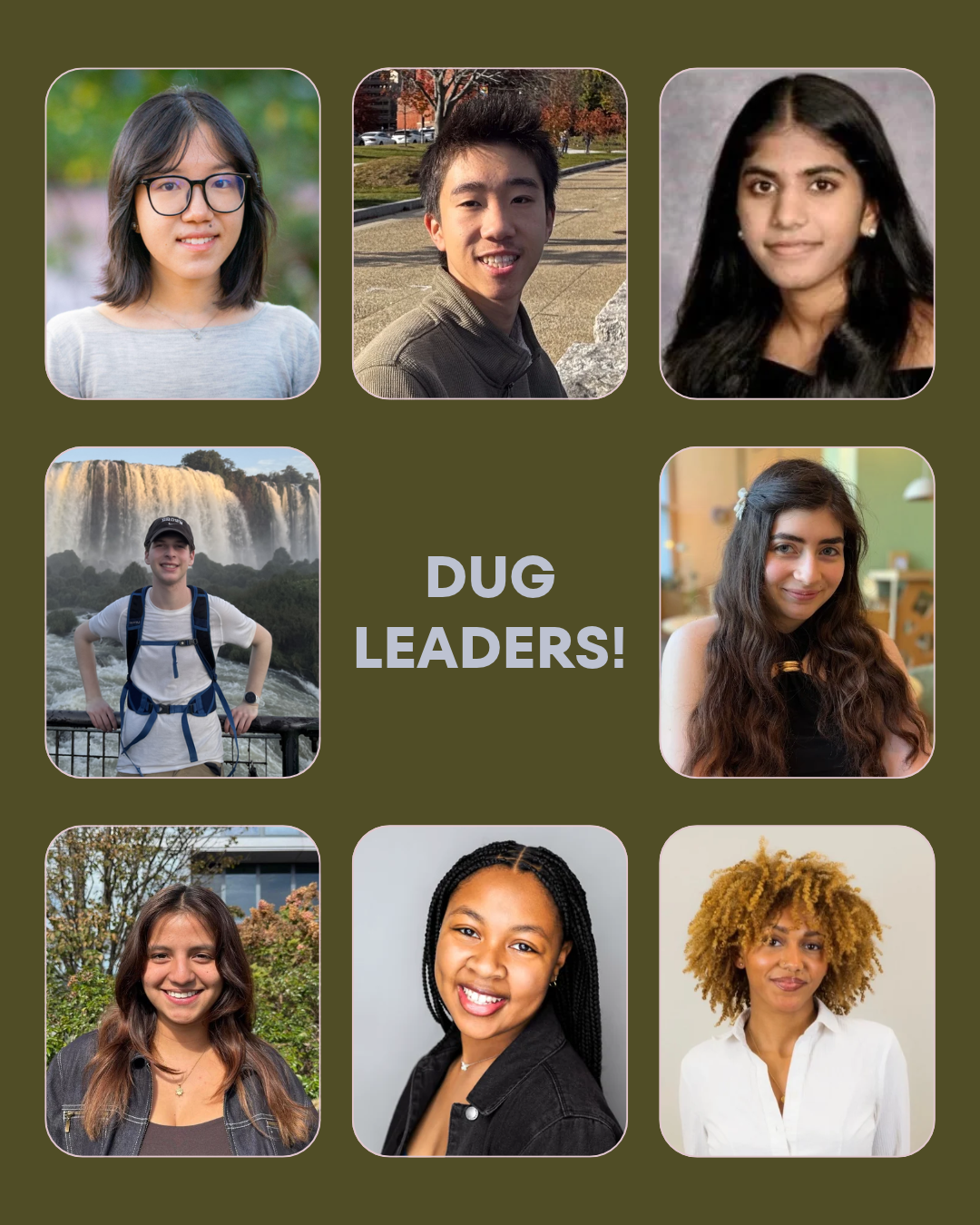
Every DUG leader has their own story and relationship with the department, outlined below. What belonging looks like for each of them is different, but all have found their place in CoPsy.
Understanding Concentrations
Danaye Martin ’28, a Psychology DUG leader, always knew what she wanted to study. “Psychology gives you freedom and an opportunity to really discover what it is about the mind that interests you," she shared. “You're going to get to explore a lot of different areas of research within psychology, and it's really cool because there's not a lot of specific requirements. You kind of just get to take whichever CoPsy courses interest you. I really like that about it, and I think that's what draws a lot of people to psych.”
Not all students arrive at Brown knowing their plan of study. Mo (Momo) Chen ’28 discovered her love of cognitive neuroscience through introductory psychology and neuroscience courses. As she explained, “we're based in the neuroscience underlying how cognitive functions, behaviors, and the mind work. So, it's a slightly more focused perspective on where our behavior comes from, the systems that underlie it, and methods that we can use to study these behaviors as well as cure [related] diseases.”
Cognitive science, the other degree supported by the CogDUG leaders, “is a very broad, interdisciplinary area that combines different disciplines from neuroscience, psychology, linguistics, computer science, and any discipline that looks at the mind and cognition, and explores topics like consciousness, perception, etc.” Chen expanded.
Ariella Reynolds ’27 has been a DUG leader of BDS for just over a year, and is directly advised by Professor Steven Sloman, who created the concentration in 2017.
“[BDS] originated because so many students were coming to [Professor Sloman] with these ideas for independent concentrations that all contained, at their core, this idea of investigating judgment and decision-making,” she contextualized.
Research and Development
While the paths the DUG leaders have taken to their concentrations vary, their research experiences and involvement in the department can vary even more widely.
Jeffrey Mu ’28, whose introduction to CoPsy came through a first year seminar with Professor Fulvio Domini, has since worked in Domini’s Lab, the 3D Information for Perception and Action Lab, in addition to the Brown Visual Computing Lab. In a different vein, Meghana Konda ’28, who studies cognitive neuroscience, works under Dr. Brandon Gaudiano at Butler Hospital. Between the DUG leaders, they represent ten different labs, pursuing fields from marijuana usage to cognitive development.
Reynolds has worked in the Sloman Lab for almost three years. “That has probably been one of the best experiences I've had at Brown, if not the best,” she shared. “Right from the get-go, Professor Sloman gave me real responsibilities. I learned so much about creating studies from the ground up, ideating, iterating, and just really getting such an appreciation for the research process.”
The same applies to teaching. Tori Ashton ’27, a Psychology DUG leader, works as a TA for CPSY 0010 (Mind, Brain and Behavior: An Interdisciplinary Approach). “I didn't really know anything about psychology before I came to Brown, so I took the intro course with Professor Festa, who is amazing.” Ashton reflected. “Everything I learned clicked for me, and psychology helped me make sense of the world around me. It's very full circle to now be TAing her course.”
Types of Support
For Angie Boza Juarez of Psych DUG, the CoPsy DUGs were a direct influence on her decision to declare Psychology. By attending a concentration workshop, she learned about the direct applications of psychology to therapy and other interests she holds. She emphasized, “That's what inspired me to apply to the Psych DUG because we really need those kinds of workshops that help us to understand what we're seeing.”
Ashton encouraged students to seek help with courses, connections, postgraduate options, “or to just get to know other people in the psychology concentration.” As Konda explained, “[s]ince we've been through that same process of trying to figure out the concentration, and also figure out what classes we want to take, we're able to offer help and connect them to professors.”
For Reynolds, being a DUG Leader for BDS has “made me in awe of just how many different fields are encapsulated within BDS. I've had students come to me who are looking at environmental sustainability or really, really fascinating political questions, and often, marketing,” she shared. “To know that our field is responsible for producing so many incredible thinkers across so many different disciplines is remarkable.”
Department Reflections
Konda highlighted the importance of academic access in the department. “There's just such a broad range of classes that the department offers,” she said, “and I think there's something for everyone.” Many of her courses involved students outside of the department, as she credits, “because there're so many different aspects of the human brain that [CoPsy] offers. The professors are also very willing to help and clarify things, which I also find is very important.”
Mu, who blends applied math and computer science with his studies in cognitive science, reflected, “I like how faculty working on different areas can find insightful points of connection in the ways they approach their research, and in their tastes for interesting questions.”
“To be able to have had the opportunities that I've had within this department has been unbelievable.” Reynolds reflected. “I would encourage any student reading this to reach out to professors if you're curious about research, maybe cold email or apply for an UTRA, because you never know how professors will shape what you want to do in the future, or your interests in general. You may end up with your favorite extracurriculars at Brown.”
Ashton echoed, “Everyone, every professor that I've met and spoken to or taken a class with, has been extremely helpful, extremely welcoming. They're always looking for people to join their labs to learn more, either just as a volunteer or whatever it may be.”
Postgrad Plans
The DUG leaders intend to pursue a variety of careers, from individual therapy to organizational behavior to multiple kinds of doctorates.
Chen is interested in industry, bring[ing] the CogNeuro over into practice in a way that's “ethical and respects the health and biology of every user, but also makes the experience really great for both consumers and business.”
Adam Berg ’28, a BDS DUG leader, and Konda, on premed tracks, both plan to study psychiatry. Berg reflected, “[Psychiatry’s] all about how people [are] making decisions, and being analytical about decision making and helping people live their best lives. I think BDS and understanding why people decide to do things in a certain way helps you be a better doctor and psychiatrist.”
Martin added, “Even in my junior year, I'm not exactly sure what I'm going to be doing after grad. Don't worry if there's so many different options that present themselves to you, and you're thinking like I have no idea which one I want to try for, because there's just so many ways to get to where you want to be in psych. I would just say embrace the options.”
Advice for Students
Boza Juarez has taken classes for her Psychology degree across departments. She emphasized, “Don't be afraid to try different paths. It [can] be difficult to actually decide between classes since we're at Brown, and we have all this flexibility to choose classes. But my best advice will be: if you like the title, if you like what you are reading, just go with it.”
Berg agreed, “A lot of people are really afraid of going into the things that they really like and really committing to different and weird things. I think it's more of a strength is like being into the weird stuff, and like all the disparate things that you like.”
It is this kind of thoughtful advice that excites the DUG leaders, that they provide at their events and individual interactions. “The most important part of [being a DUG leader] is really just being there for when students need you,” Reynolds concluded. “The logistics is a necessary part of it, but it really does come down to: How can I [let] students in my field, or looking to get into my field, know in every way you can that you're there for them, and you can help them.”