People take countless actions in the course of their daily lives. But what drives people to act, and how do these actions affect them in turn?
“Typically, in the world of cognitive science and psychology, you perceive, you make a decision, and then you act upon it,” Professor Joo-Hyun Song said, “But we wanted to see a more interactive, reciprocal relationship.”
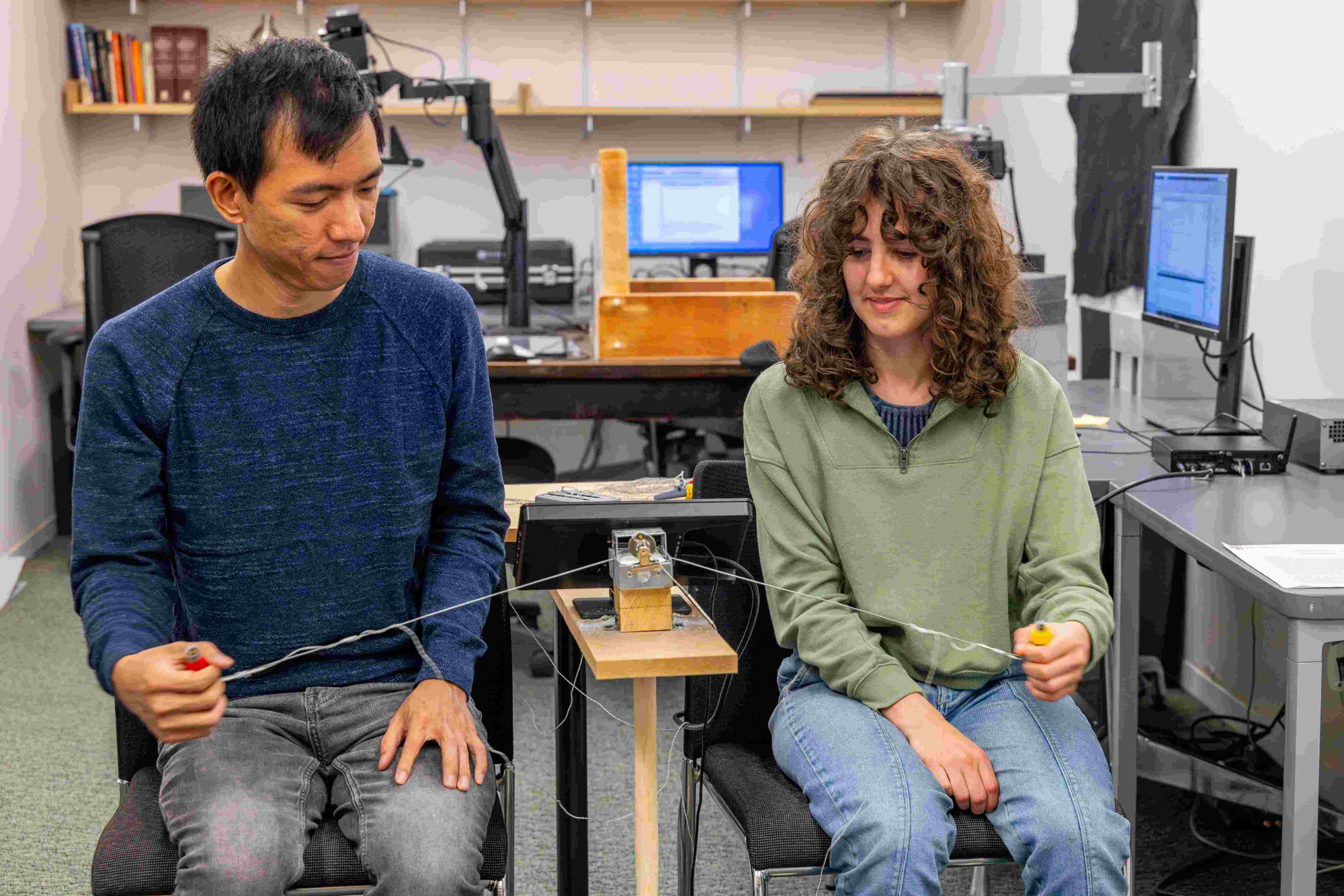
Song and her Perception, Action, and Cognition (PAC) Lab have explored these three titular elements from all directions. They have studies underway locally, internationally, and even beyond the planet. Within the lab, postdoctoral researchers and graduate students each develop their own projects.
This includes the work of Tri Nguyen, a postdoc in the PAC Lab. Having trained in motor control and specifically controlling complex objects, Nguyen now explores joint action, through a ball-throwing task with significant implications for reciprocal plasticity—how does changing one element (perception, cognition, motor) change the others?
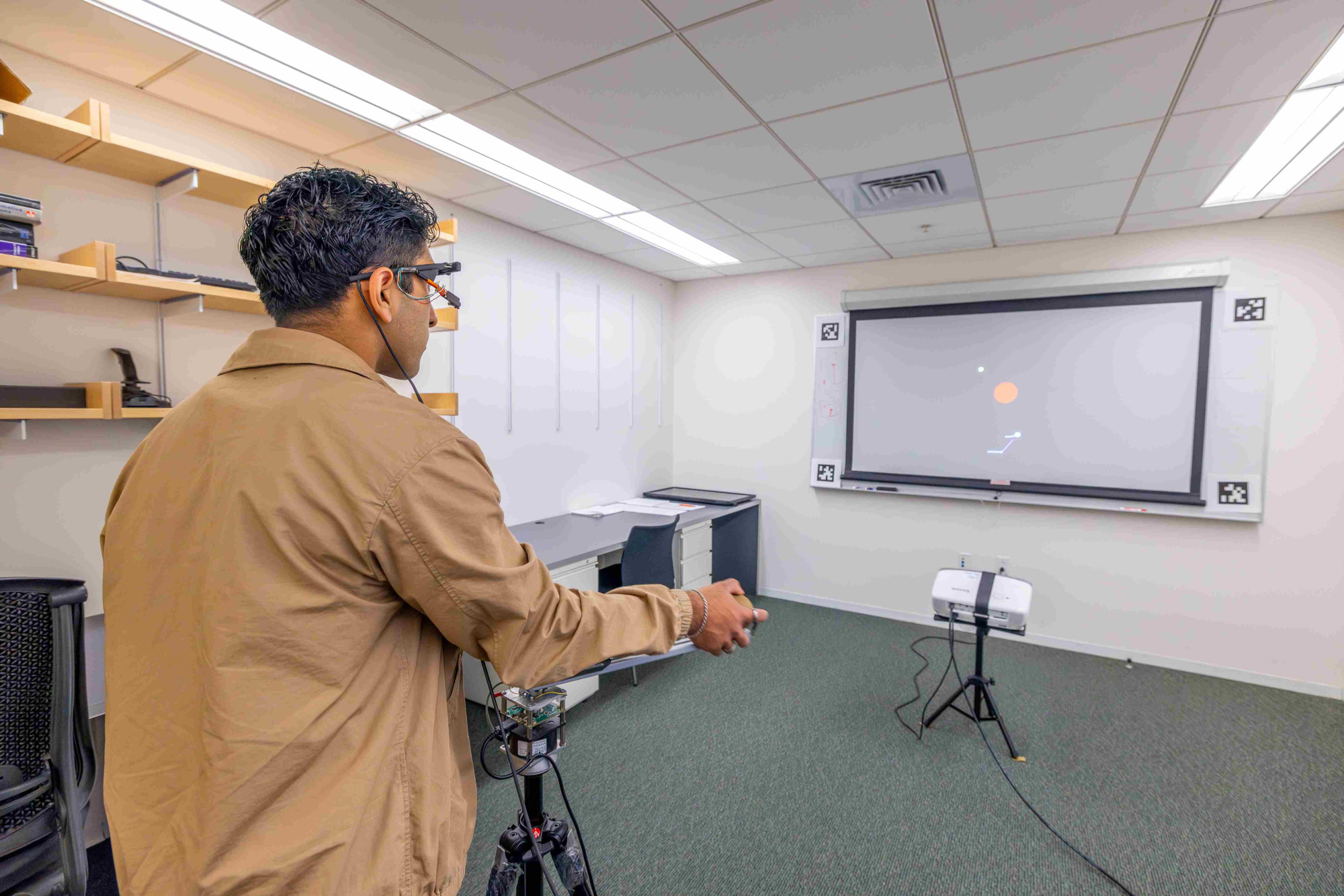
Through a virtual ball-throwing task, Nguyen explained, he and his team measure how participants improve as they repeatedly try to hit their target, while incorporating perceptual and cognitive elements to the trials. Interestingly, he noted, despite the many possible ways to throw an object, all of his participants began to release the ball at the same time interval (300 milliseconds) after practice.
Song added, “In this case, we simply train people to throw a ball, and then the timing emerges from your motor system, although you are not explicitly thinking, ‘Oh, 300 milliseconds, 305 milliseconds.’ But it is naturally part of your system, and then this system is in turn influencing the perceptual auditory timing discrimination.”
These findings—and those of the study’s variations, looking at working memory and learning strategy, among other effects—affirm the underlying goals of the PAC Lab. “We tend to think of these faculties of the human mind as separate elements on their own, but the more we look, [we see] that all of these processes are integrated and working together at the same time,” Nguyen reflected. “They're working together in order to help you learn how to ride a bike or how to swim, or to figure skate, or whatever it may be.”
Across the PAC Lab, researchers explore many different niches, including the collaboration of humans and robots on tasks and the development of motor actions for astronauts in space. Rather than competing, Song explained, “[t]hey can develop their own unique niche and the toolkit. Then when it is needed, they can help each other. Tri is an expert on complex motor things. One of my graduate students became a sensory motor adaptation expert. [Another] wants to develop a different type of extended foraging, that action interaction system.”
“In the end,” Song summarized, “each can have their own home, they develop a different skill set, and then when they need it, they can help each other. In the big picture, it helps me find connections between the perceptual system and then the sensorimotor system.”
Across its many projects, aims, and applications, the PAC Lab commits to interdisciplinary, collaborative work grounded in how we move, perceive, and think. As Nguyen put it, “at the end of the day, everybody moves, everybody acts, and at least in our personal view, action is the point.”